
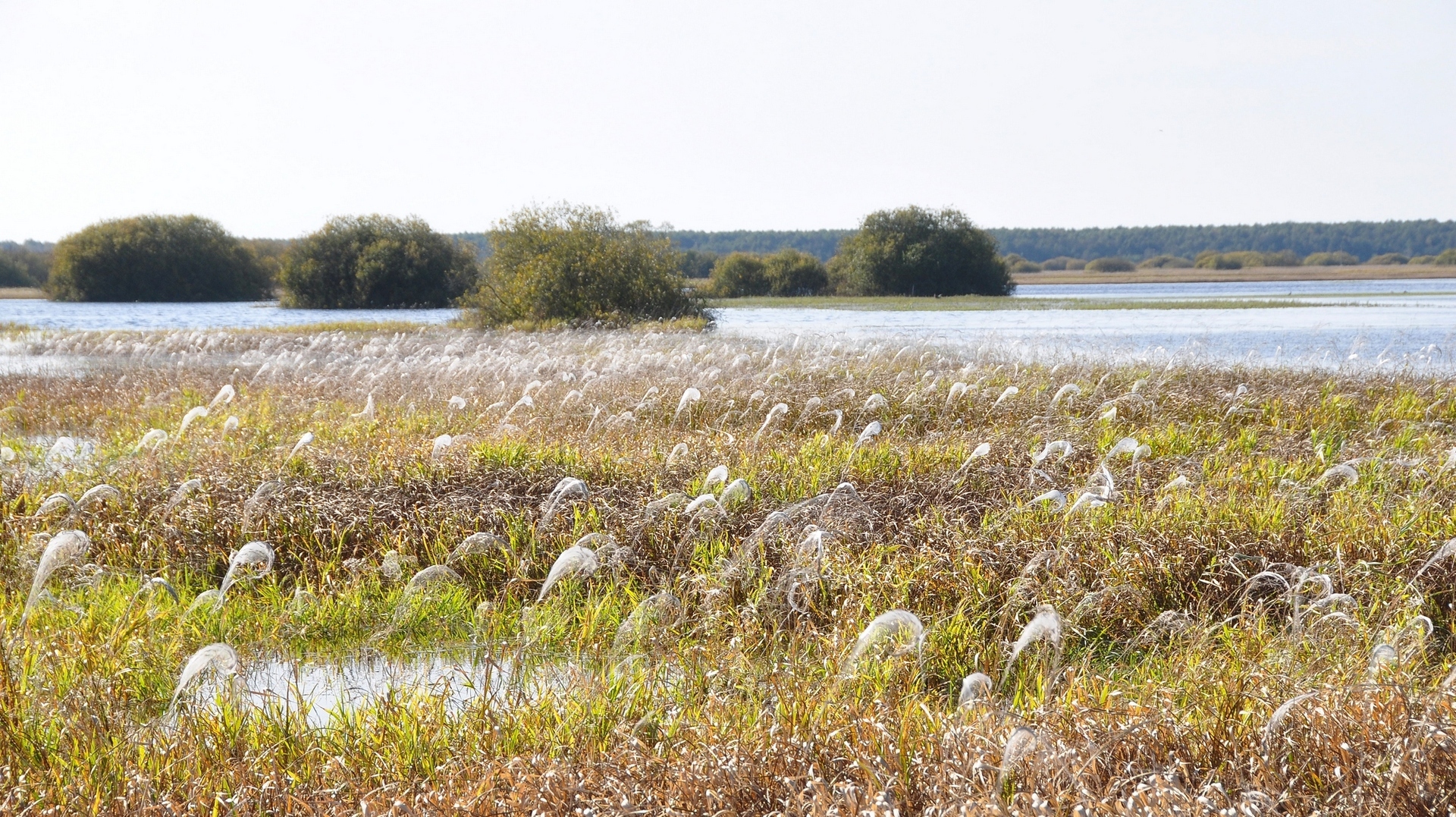
Biebrzański National Park
The largest, longest, and wildest national park in Poland is the Biebrza National Park, which was established relatively recently, only in 1993. The heart of the park, famous for its peat bogs, marshes, and wetlands, is the 160-kilometer-long Biebrza River, also called the Polish Amazon. A distinctive feature of this pristine river is its annual flooding, which creates new meanders and floodplains, turning vast meadows into lakes. The Biebrza Valley has largely retained its natural character, and the untouched and hard-to-reach areas make this place mysterious and at the same time very rich in flora and fauna.
The Biebrza Valley is one of the richest habitats for water and marsh bird species (about 270 species) including: the black grouse, hazel grouse, crane, and the wood sandpiper - a symbol of the park. The park is also known for the largest population of moose and beaver in Poland, the latter from which Biebrza most likely derived its name (Biebrza - the beaver river). The natural wealth of the area attracts many naturalists and ornithologists from all over the world.
Biebrza National Park offers over 600 km of various tourist trails: hiking, biking, and kayaking. They often lead over footbridges and piers, and along their routes, there are also numerous observation towers. Biebrza is a great choice for a several-hour paddle during which you can immerse yourself in nature and escape from reality. Many bird and animal species can often only be observed from the perspective of a kayak. An alternative to kayaking is rafting, which allows you to discover the park's natural wealth in an unusual way.
An interesting proposition is the recently created longest educational trail in the park running across the Biebrza Valley, the Szuszalewo-Nowy Lipsk path. Its first stage is a footbridge with a self-operated ferry crossing, and at the end, an observation post has been built from which you can observe the unique nature of the Biebrza marshes. When visiting Biebrza National Park, it is also worth walking the approximately 400-meter-long Długa Luka boardwalk between the marshes. At its end, there is a viewing platform from which you can watch the flora and fauna of the surrounding peatlands. Along the way, you might see moose, foxes, ermines, and cranes.
You can encounter a moose on the "Tsar's Road," a 35-kilometer-long extremely picturesque route. Tsar's Road got its name from connecting the tsarist fortresses of Łomża, Osowiec, and Grodno dating back to the partition era. It was built in 1895 for the Osowiec Fortress and the defensive system of the western border of the Russian Empire. The decision to build it was personally made by Tsar Nicholas II by a separate decree. Fortress enthusiasts, as well as historians, like to retell the anecdote that the tsar himself sketched the road's outline with a ruler placed between Grodno and Warsaw. This is very likely and explains the fact that Tsar's Road was built in long, straight sections, which was very difficult on the marshy terrain and caused enormous financial costs. The Podlaski Stork Bicycle Trail and the Green Velo Trail also run through Tsar's Road.
On foot, by bike, or on a raft - surely everyone will find the best way to explore these extraordinary places.

Relax Surrounded by Nature
ANDRZEJKOWA NIGHT OF HITS
Gingerbread-Scented Santa Weekend
Family Christmas
IN THE SECRET GARDEN New Year’s Eve 26/27
Winter holidays FIRST MINUTE
Comfortable Business Trip
Weekend for two Touch of nature and relaxation
SPA with a friend